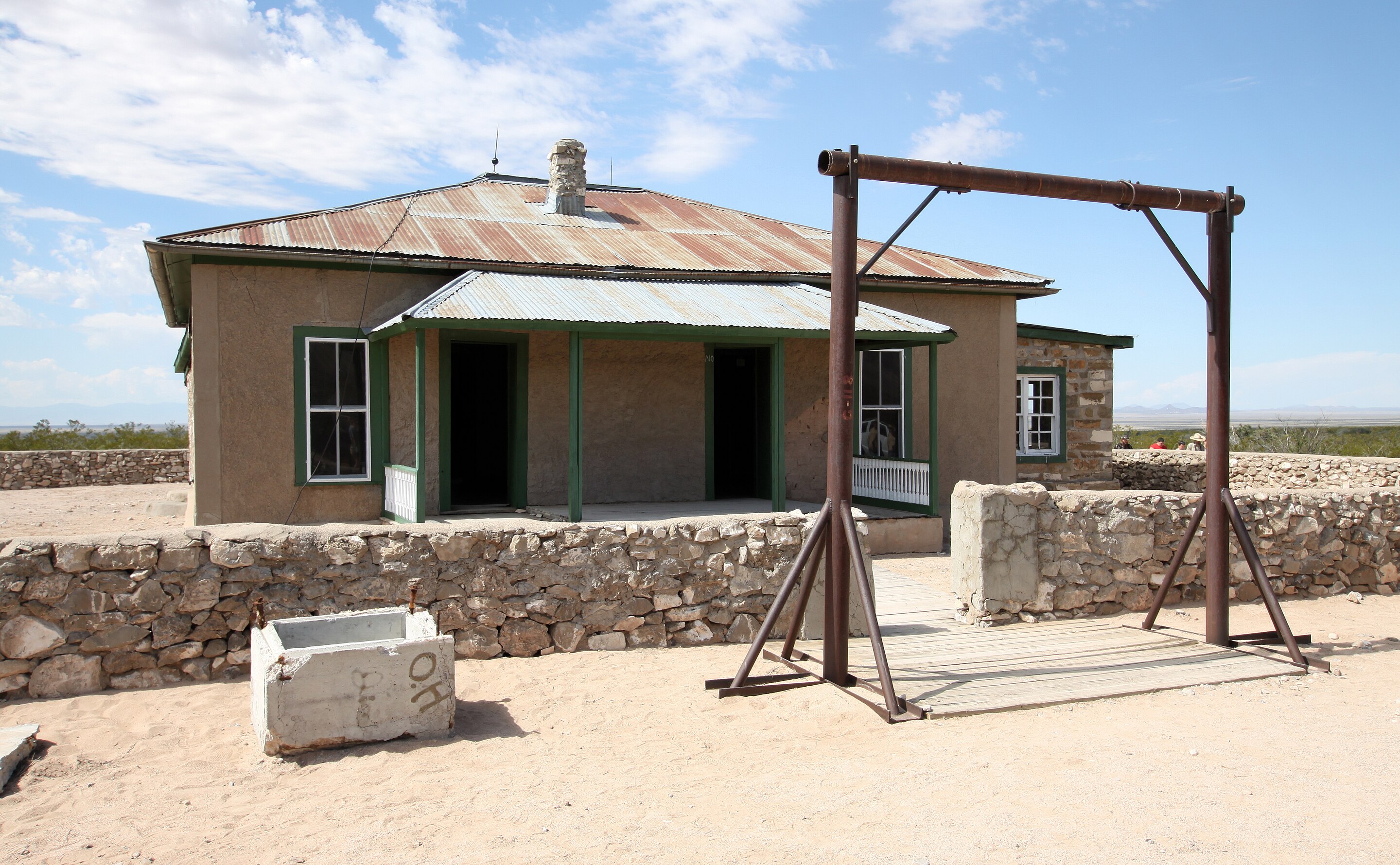
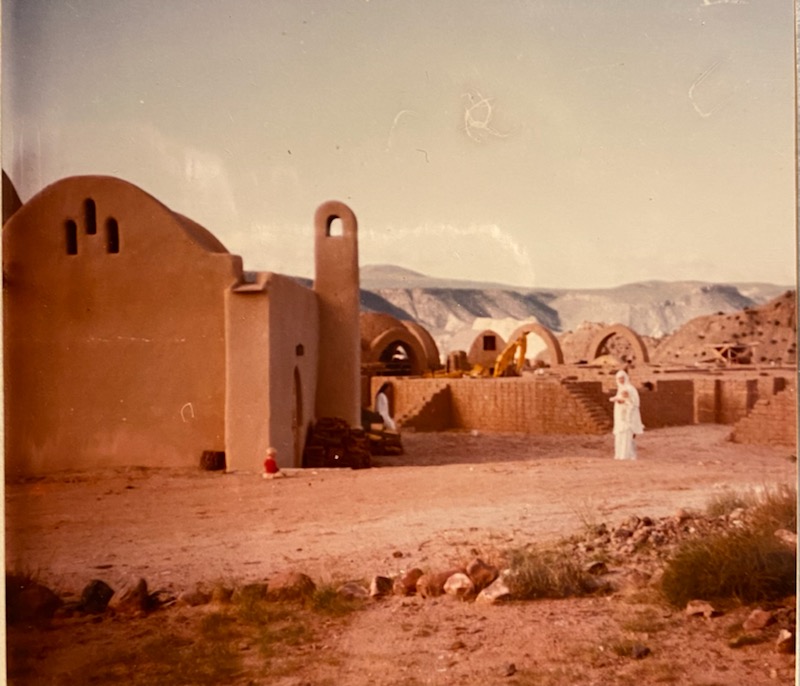
McDonald-Schmidt Ranch House. This file is licensed under the Creative Commons Attribution-Share Alike 2.0 Generic license.
The McDonald Ranch House in the Oscura Mountains of Socorro County, New Mexico, was the location of assembly of the world’s first nuclear weapon. The active components of the Trinity test “gadget”, a plutonium Fat Man-type bomb similar to that later dropped on Nagasaki, Japan, were assembled there on July 13, 1945. The completed bomb was winched up the test tower the following day and detonated on July 16, 1945, as the Trinity nuclear test.
The George McDonald Ranch House sits within an 85-by-85-foot (26 by 26 m) low stone wall. The house was built in 1913 by Franz Schmidt and is built of adobe, which was plastered and painted. The plutonium hemispheres for the pit of the Trinity nuclear test “gadget” (bomb) were delivered to the McDonald Ranch House on July 11, 1945. Text via Wikipedia.
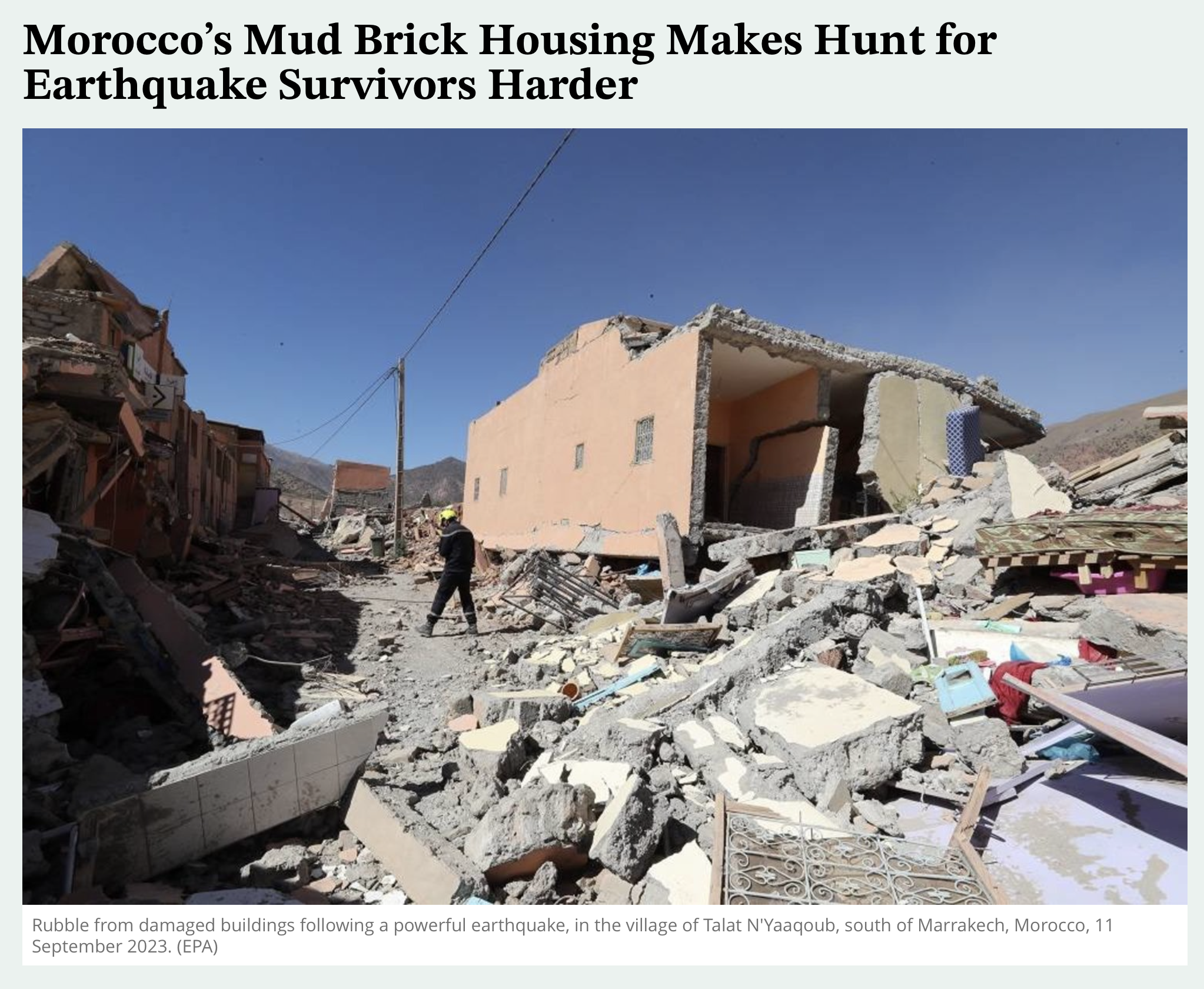
Reinforced concrete building damaged in Morocco earthquake
Morocco recently experienced the most devastating earthquake that the country has had in the last 60 years. To date, more than 2,600 people have died and news outlets are quick to point out that the cause of death isn’t the earthquake, but the buildings made of earth. While I am aware of the thousands of mud brick and rammed earth buildings that define the villages in the Atlas Mountains where the disaster took place, I note that the photos of the devastation often show buildings made of reinforced concrete or concrete masonry units. The tendency to villainize earthen architecture traditions is a common practice. The headline of one article reads, “Morocco’s Mud Brick Housing Makes Hunt for Earthquake Survivors Harder” and yet the cover image is clearly of a reinforced concrete building. As I scroll through articles about the earthquake, I do see many earthen buildings that have been damaged, but I also see a large number of buildings constructed of industrially produced materials. In the 1995 earthquake in Kobe, Japan, three times the number of people died, and over 100,000 buildings were destroyed in a city that was largely constructed of concrete and steel. Kobe was a magnitude 6.9 earthquake similar to Morocco’s 6.8. The 6.9 Loma Prieta earthquake in the San Francisco Bay Area caused an estimated $14 billion in damage to buildings, bridges, and highways with the majority of deaths happening under reinforced concrete structures like the Cyprus Street Viaduct.
The New York Times writes, “Mud brick buildings common to the region — some of which date back to before Morocco’s colonization by the French — were reduced to a collapsed sand castle.” France colonized Morocco in 1912, making many of the buildings older than 111 years old It should be pointed out that the seismic activity of these regions is high, and earthen building traditions have survived in seismic zones for thousands of years. The oldest buildings in every seismic zone are constructed of earth, including those found in the San Francisco Bay Area. A visit to downtown Sonoma, the Missions, the Petaluma Adobe, and countless other mud brick buildings demonstrate the longevity of earthen architecture in earthquake-prone regions. A visit to Santiago, Chile, a city with a history of earthquakes, will also demonstrate how earthen architecture has survived in many urban and rural environments while adapting to a ground that shakes.
Yes, buildings made of mud brick and rammed earth did collapse causing many deaths. However, reinforced concrete and concrete masonry units did as well — there simply happens to be more earthen buildings in that region, just as there are more reinforced concrete buildings in Kobe, Japan. And despite the reality that our continued quest to combat the forces of mother nature, we continue to find that she wins. But perhaps she is not the villain, nor is architecture made of earth. According to Bloomberg, man-made climate-related disasters due to climate change account are linked to approximately 5 million deaths per year and the concrete industry is responsible for about 8% of planet-warming carbon dioxide emissions. Earthquakes account for approximately 60,000 of those deaths, however, few of those are related to the collapse of earthen buildings. Some of those deaths are related to the collapse of buildings made with other materials, landslides, and tsunamis. Some earthquakes are a product of fracking and mining.
I do not believe that earth architecture is the villain in the tragedy in Morocco. Rather, it is the cultural perception of the building material, and the prejudices against those that live in them, within a capitalist society. Earth is an inherently ecological material, possesses excellent thermal mass properties, requires little embodied energy, and is recyclable—earth buildings can return to Earth. It should be noted that most of the recent Pritzker Prize winner Francis Kere’s buildings are constructed of mud, and as I wrote about in my book, Earth Architecture, a number of universities including the Pontificia Universidad Católica del Perú, the University of Kassel, Germany, and the University of Technology, Sydney are advancing the technology of creating earthquake-resistant earth buildings. Let us look to solving the 5 million deaths per year due to climate change, and improve the technologies of earthen construction as humans have continued to do for the past 10,000 years of civilization before we eradicate large percentages of the population due to industrialized building practices that have not proven to safely house the planet, unlike our planetary traditions of earthen architecture.
The Adobe Factory in Alcalde, New Mexico, is the largest adobe factory in the world, with the capability of producing up to 25,000 adobes each day. Here’s how it is done:
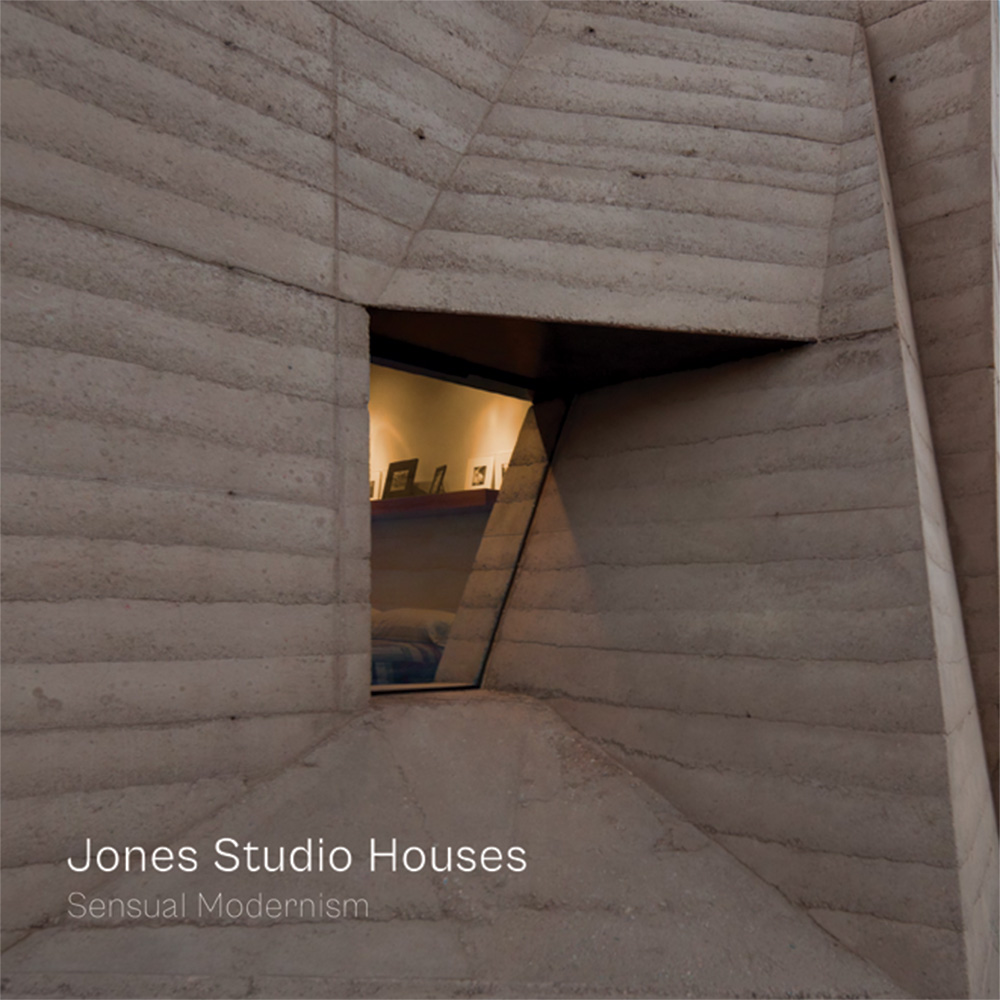
Jones Studio Homes: Sensual Modernism is a self-imposed limited look at the 40-year-plus career of Eddie Jones. Almost unheard of outside the southwest United States, Jones has quietly accumulated a body of work ranging beyond residential design to include major federal projects impacting the edges of America… to be featured in a soon to be published monograph!
Supported by Aaron Betsky’s insightful forward, plus an enlightening interview with Vladimir Belogolovsky, and comments from many of his famous colleagues, Jones summarizes his lifelong dance with architecture through the personal stories embedded in each house. Refusing to repeat himself, the work tests the reality of gravity on a diverse spectrum of interpretive vernacular responses to climate, landscape and function. Although designed by the same hand, the forms vary as much as the choice of materials. Rammed earth, concrete, wood and metal are explored together and separately yet remain subordinate to Jones’ fascination with glass.
Utilizing photographs, hand-drawings and first-person accounts, the motivations and joy of being an architect are expressed by an exceptional whole informed by many ordinary parts.
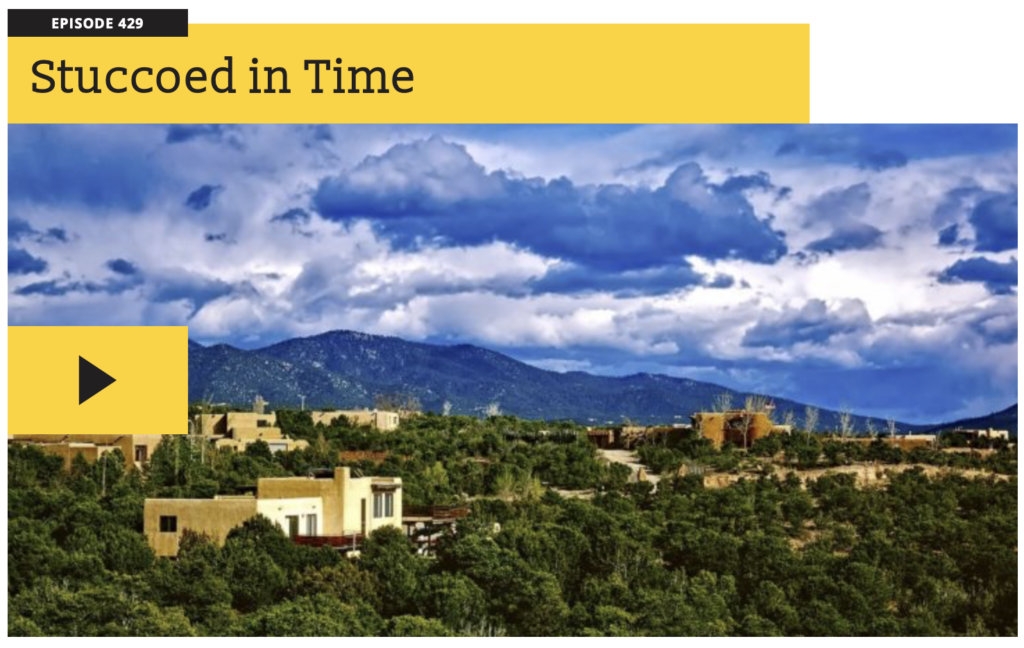
Santa Fe is famous in part for a particular architectural style, an adobe look that’s known as Pueblo Revival. This aesthetic combines elements of indigenous pueblo architecture and New Mexico’s old Spanish missions, resulting in mostly low, brown buildings with smooth edges. Buildings in the city’s historic districts have to follow a number of design guidelines so that they conform with the dominant style. Deviating from those aesthetics can stir up a lot of controversy.
But this adherence to the “Santa Fe Style” hasn’t always been the norm. For a time, there was actually a powerful push to “Americanize” the city’s built environment. Then, over a century ago, a group of preservationists laid out a vision for the look and feel of Santa Fe architecture, and in the process dramatically transformed the town.
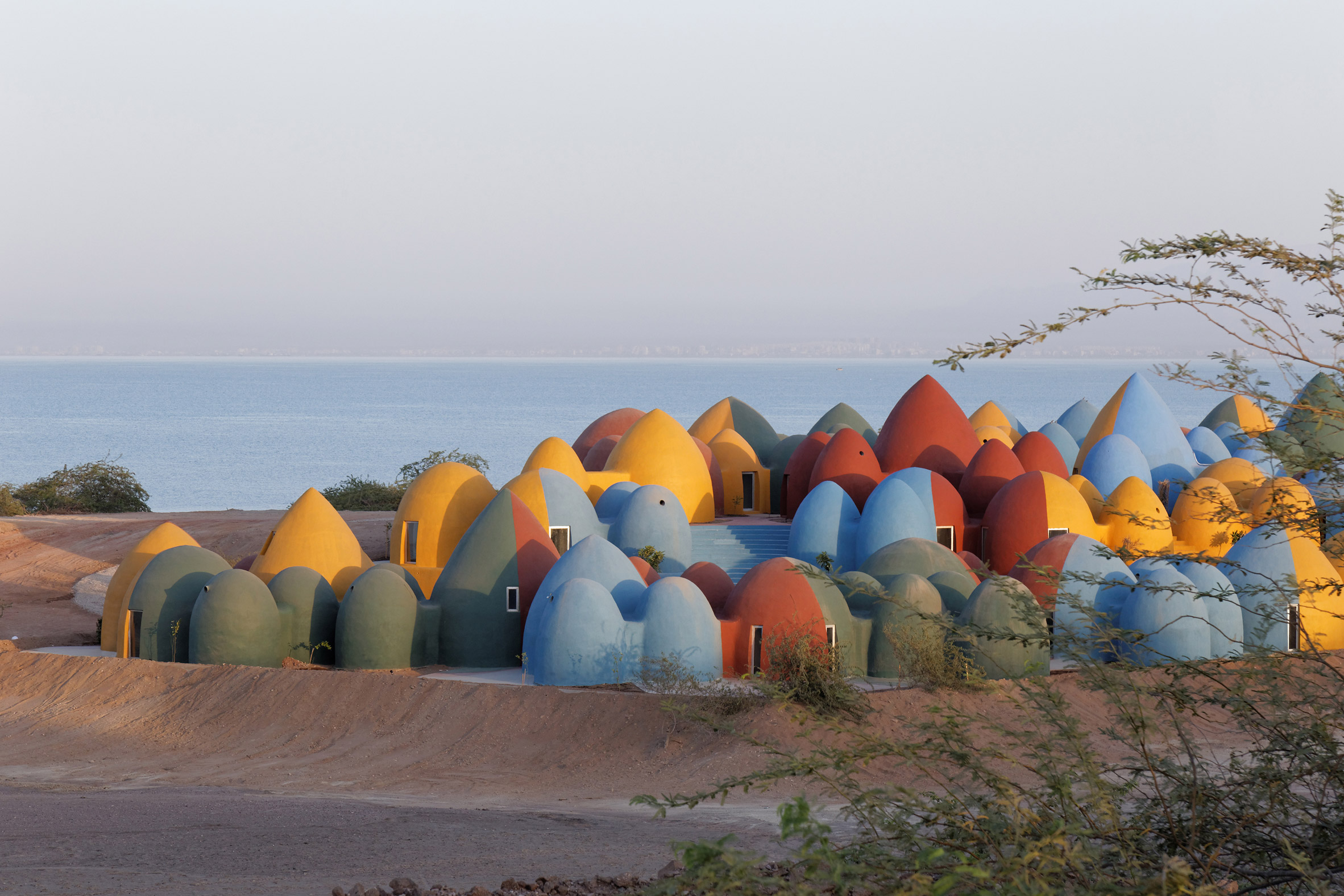
Iranian practice ZAV Architects drew on the colourful landscape of the island of Hormuz for this holiday community that is housed in around 200 brightly colored domes overlooking the Persian Gulf.
The project is a multitude of small-scale domes built with the superadobe technique of Nader Khalili, the innovative and simple technique using earth and sand packed into bags. Domes are familiar structures in the region. Their small scale makes them compatible with the building capabilities of local craftsmen and unskilled workers, which have been prepared for this project with previous smaller projects. Today they are trained master superadobe masons, as if Nader Khalili multiplied exponentially.
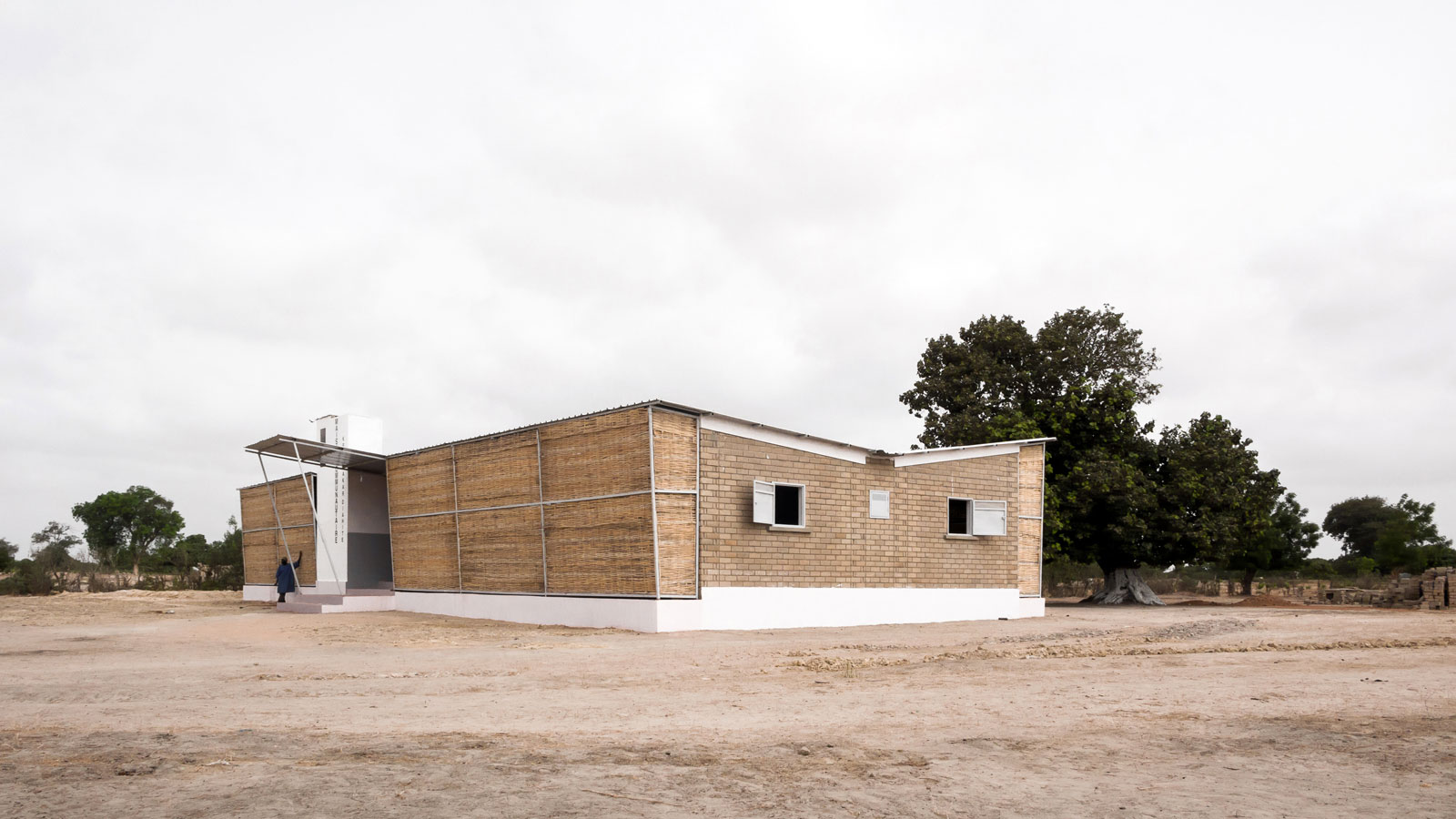
The H2OS project, or Open Source Prototype House for Eco-Villages in Senegal, is a prototype house constructed of compressed earth block, that can harvest and store water supplies for all domestic uses (drinking, cooking, washing, irrigation) and to integrate the scarce water resources in a few artificial walls. The project relies on ancient knowledge such as how to harvest rain water or how to ventilate rooms while incorporating up to date technologies for energy production from renewable sources. Learn more here.
Listen to the mud episode of Unsettled podcast from Santa Fe Art Institute created by Dr. Alicia Inez Guzmán & Diego Medina. Listen to artists Joanna Keane Lopez and Christine Howard Sandoval reflect on the the complex history, traditions, politics, and meanings embedded within the act of building with mud in New Mexico and California.
Building with Cob (2006) by Adam Weismann & Katy Bryce
Before founding a world leading clay plaster company, Clayworks Ltd, Adam Weismann and Katy Bryce specialised in earth building, with a particular love of Cob. The couple built many cob structures, with clients including HRH Prince of Wales, and finished the exteriors in Lime and the interiors in Clay. It was during this time that Adam and Katy developed a particular interest in clay plaster finishes. Their book, Building with Cob: A Step-by-Step Guide (Sustainable Building) shows how to apply this ancient technique in a wide variety of contemporary situations, covering everything from design and siting, mixing, building walls, fireplaces, ovens and floors, lime and other natural finishes, and gaining planning permission and building regulation approval. It also explains in detail how to sensitively restore an old cob structure.
Building with Cob was described by David Pearson (Author of The New Natural House Book) as ‘An inspiring vision and practical guide to one of the most versatile building materials’.
Keith Hall, Editor of Building for a Future magazine, concluded ‘This has got to be the most practical and beautifully illustrated book on earth building every published’.
The highly illustrated book, abundant with photographs, has step by step instructions for creating cob structures as well as information on natural finishes including lime plasters and home-made clay finishes. It also contains advice on how to construct a cob building that complies with modern building standards and guidance on restoring and repairing old cob structures.

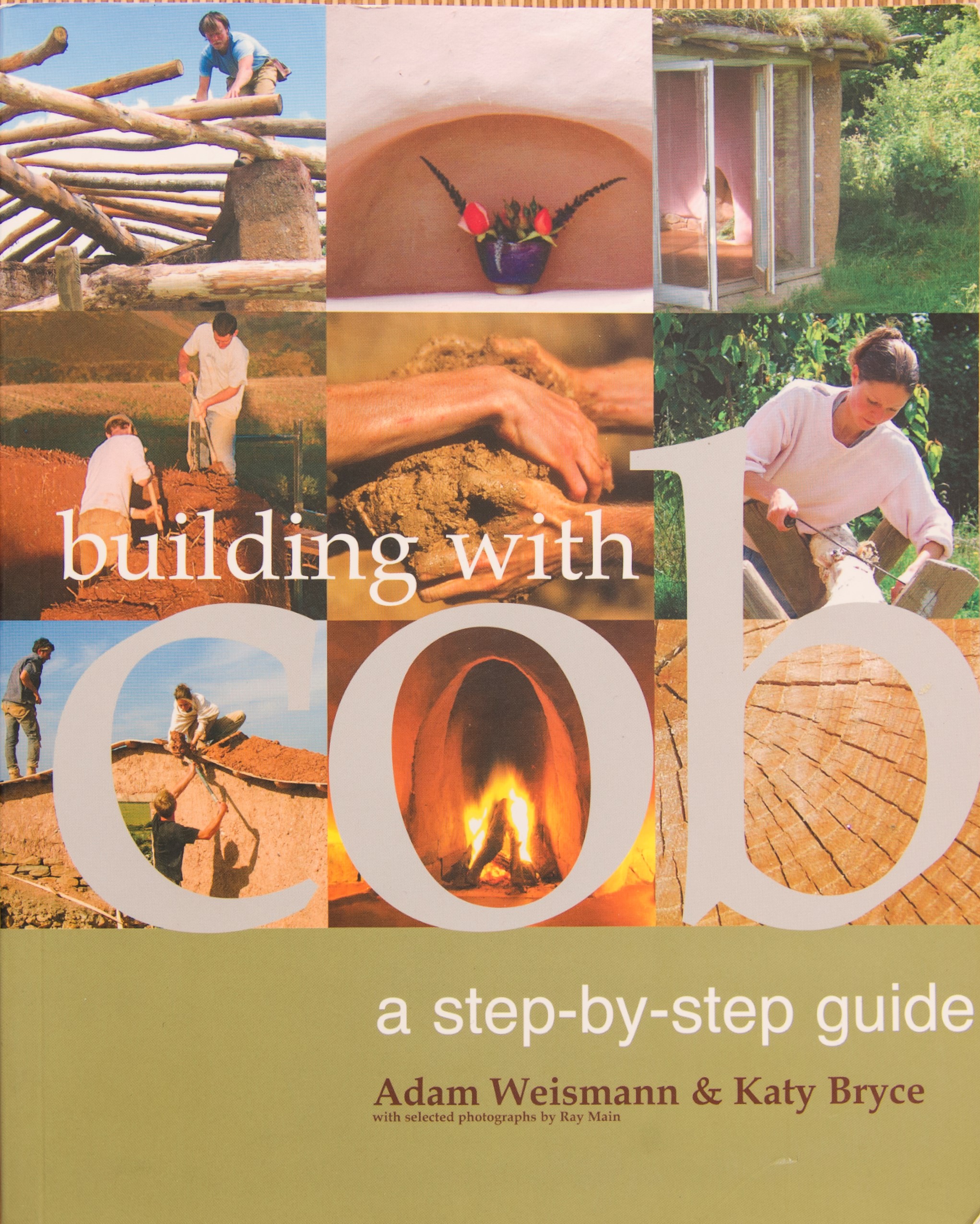
 shows how to apply this ancient technique in a wide variety of contemporary situations, covering everything from design and siting, mixing, building walls, fireplaces, ovens and floors, lime and other natural finishes, and gaining planning permission and building regulation approval. It also explains in detail how to sensitively restore an old cob structure.